
Dallas County Circuit Clerk
Lynnethia Bennett is the Dallas County Circuit Clerk. The local Circuit Clerk page says the office provides general information, frequently used forms, fee schedules, and answers to common questions. It also states that the Circuit Court Clerk maintains records of seven courts and serves as Absentee Election Manager. The office mission is to serve Dallas County citizens, the courts, and the legal community.
The Circuit Clerk's record categories include contract disputes, civil torts, condemnations, worker's compensation claims, domestic matters, child support matters, juvenile matters, and criminal matters. Those case types make the office the key records contact for court case files, while Probate Judge Jimmy Nunn's Probate Office handles probate, marriage recording, recording-office documents, name changes, conservatorships, guardianships, involuntary commitments, notary matters, and elections.
Dallas County Circuit Clerk
Clerk: Lynnethia Bennett
105 Lauderdale Street
P.O. Box 1148
Selma, AL 36701
(334) 874-2523
Hours: 8:00 a.m.-12:00 p.m. and 1:00 p.m.-4:30 p.m., Monday-Friday
The Dallas County Circuit Clerk page is the official local profile for the clerk office and its case-record responsibilities.
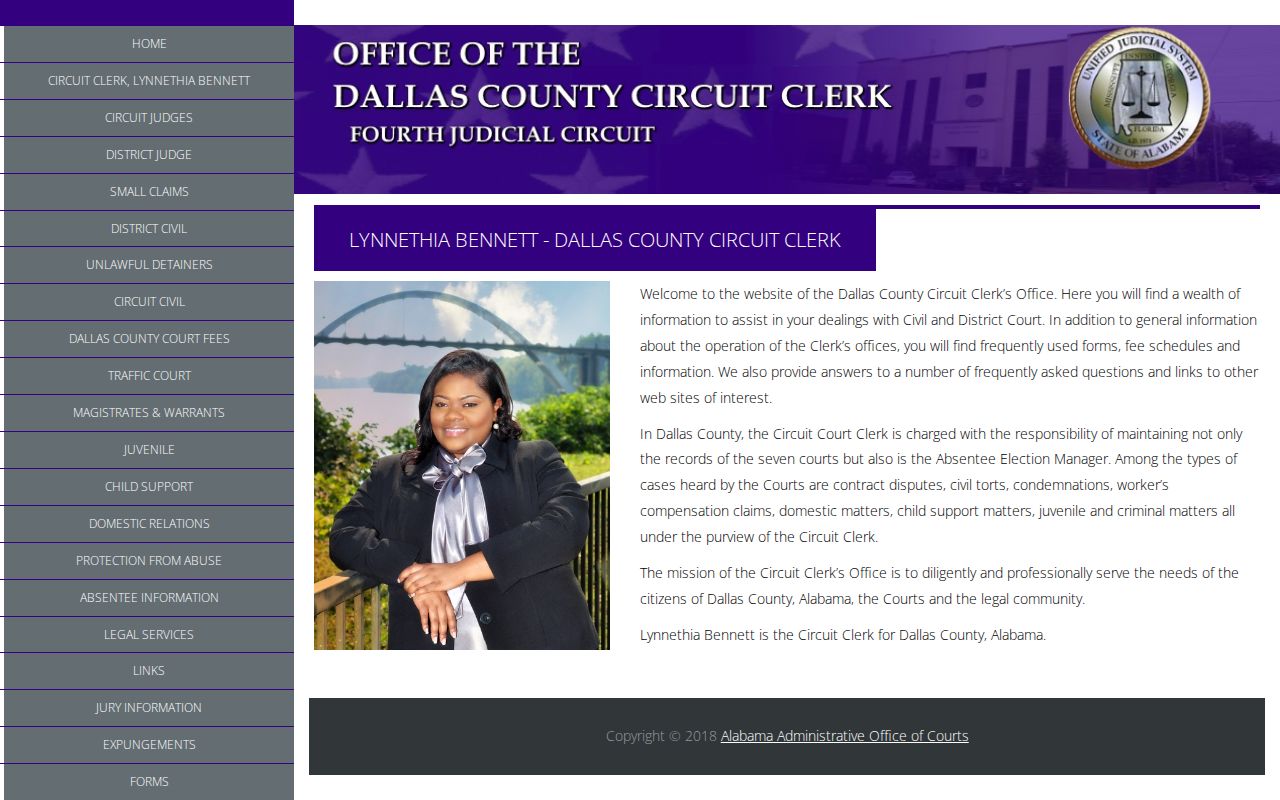
The clerk page is central because it identifies which court case categories belong with the Circuit Clerk rather than the Probate Office.
Dallas County Clerk Records
The Dallas County Circuit Clerk maintains records for several trial-court categories. A single case may generate pleadings, motions, orders, hearing notices, case action entries, financial records, and certified copies. Court staff can provide procedure and record information, but the clerk site warns that the law prohibits the Circuit Clerk from giving legal advice.
- Civil case records, including contract disputes, torts, condemnations, worker's compensation claims, and civil filing records.
- Domestic-relations and child support case records, including original filings and later modification or enforcement filings.
- Criminal case records and related case-action entries after a case opens in the trial court system.
- Juvenile case records, subject to Alabama confidentiality limits and restricted public access.
- Traffic, small claims, district civil, circuit civil, warrant, jury, expungement, and e-form service links through the local court site.
Because Dallas County has a split records structure, deed, mortgage, lien, judgment, plat, power of attorney, incorporation, UCC, marriage certificate, and probate case issues often belong with the Probate Office or Recording Office instead.
Request Dallas County Clerk Copies
A certified copy is a court copy that bears official certification from the issuing office. The research does not list a Dallas County per-page copy fee for Circuit Clerk case copies, so the request should begin with the clerk office and a clear description of the case and document. Case number is best when available. Party names and case type help when the number is unknown.
- Identify the court file type: civil, criminal, domestic relations, child support, juvenile, traffic, district civil, small claims, or circuit civil.
- Gather the case number, party names, approximate filing year, and the document type needed.
- Contact the Dallas County Circuit Clerk at the courthouse or by phone to confirm availability, copy format, and current fee.
- Ask whether the copy can be mailed, picked up, or must be requested through a statewide court access channel.
- For restricted records, expect the clerk to require proof of authority, a court order, or a narrower public copy.
Dallas County Request Fields
Dallas County's research does not show a separate online Circuit Clerk copy-request form. The useful request inventory is therefore the information a clerk needs to locate the right case record and return the right copy.
| Field | Required | Notes |
|---|---|---|
| Case number | Best if known | Used for case-number lookup and traffic correspondence. |
| Party names | Yes | Use full names for plaintiffs, defendants, petitioners, respondents, or criminal defendants. |
| Case type | Yes | Civil, criminal, domestic relations, child support, juvenile, traffic, small claims, district civil, or circuit civil. |
| Document type | Yes | Examples include complaint, order, judgment, decree, disposition, or case action summary. |
| Certified or plain copy | Yes | Certified copies are used when an official court seal or certification is required. |
| Requester contact | Yes | Provide phone, mailing address, or email if the office can process the request remotely. |
Dallas County Clerk Fees
The Dallas County court-fee table gives concrete filing fees for several Circuit Clerk case categories. These are filing fees, not necessarily copy fees. Copy and certification costs should be confirmed before payment because the research did not capture a complete certified-copy schedule.
| Filing or Item | Fee |
|---|---|
| Small Claims, $1,500 or less | $61.00 |
| Small Claims, $1,501-$3,000 | $135.00 |
| Small Claims, $3,001-$6,000 | $224.00 |
| District Civil, $6,001-$10,000 | $256.00 |
| Circuit Civil through $50,000, non-monetary, or declaratory judgment | $255.00 |
| Circuit Civil over $50,000 | $355.00 |
| Domestic Relations original filing | $203.00 |
| Domestic Relations modification or enforcement | $306.00 |
| Civil jury demand | $100.00 |
| Expungement | $300.00 |
Note: Fee amounts can change, so a mailed filing should include current confirmation from the Circuit Clerk before payment is sent.
Dallas County E-Notices
The Circuit Clerk homepage provides a specific access note for self-represented parties. To register for e-notices as a pro se party, the person goes to AlaFile and clicks Register. After completing the registration, the person must print the form and bring it to the Clerk's Office during normal business hours with a state-issued photo identification card. After processing, electronic orders in the case are sent by email.
The statewide AlaFile portal supports that e-notice registration path. Dallas County's instruction is local because it requires a printed form and in-person presentation to the Clerk's Office.
Dallas County Clerk Forms
The Dallas County court site links frequently used resources, including court fees, traffic court, magistrates and warrants, juvenile court, domestic relations, protection from abuse, jury information, expungements, and Alabama E-Forms. For expungements, Dallas County links a local petition PDF and lists a $300 filing fee in the court-fee table. ALEA explains that courts grant expungements under Alabama law, not ALEA.
Some records users arrive at the Circuit Clerk while looking for probate records. The local split matters: conservatorships, guardianships, and involuntary commitments are Probate Office services in Dallas County, even though they are court-related matters.
The Dallas County conservators and guardians page shows why some protective proceedings route away from the Circuit Clerk and into Probate Court.
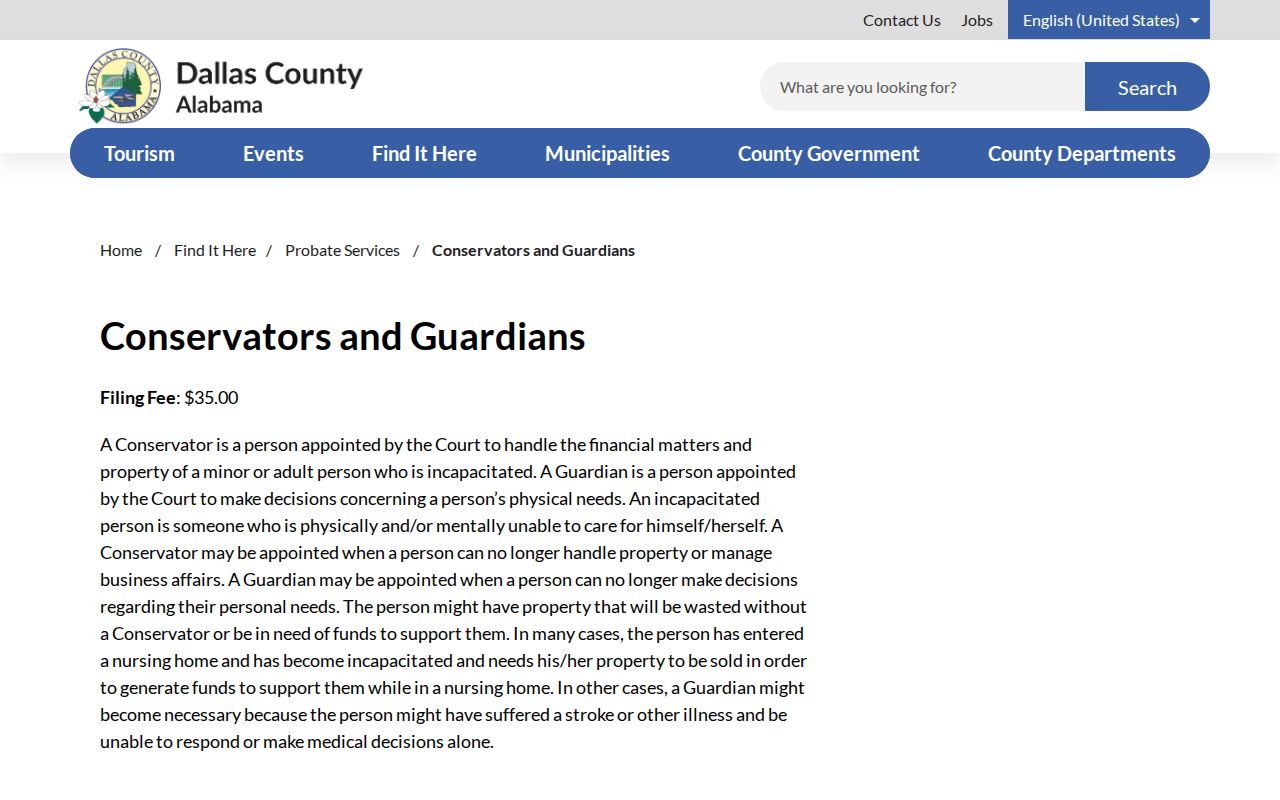
Guardianship and conservatorship records are useful examples of the practical split between Circuit Clerk court files and Probate Office records.
The Dallas County involuntary commitments page is another Probate Office service that should not be treated as an ordinary public Circuit Clerk case file.
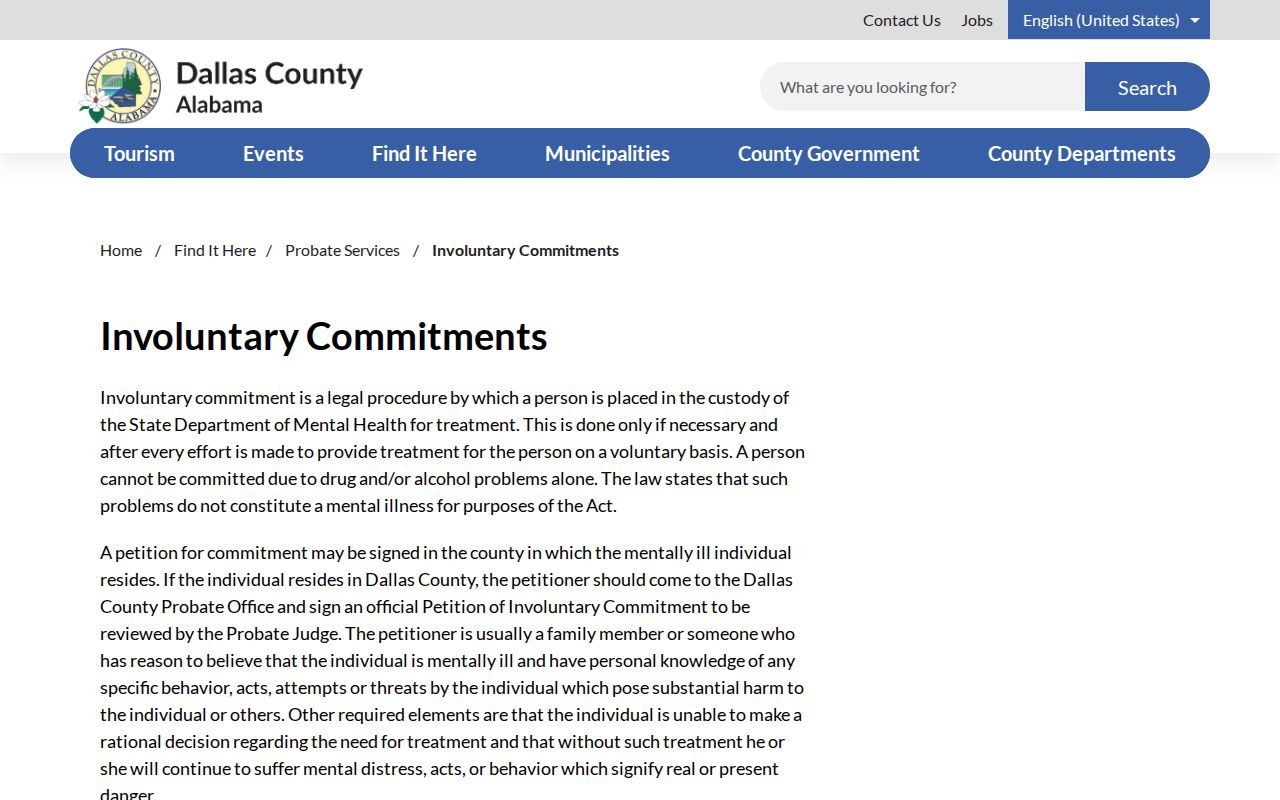
Involuntary commitment records are sensitive and may have access limits beyond ordinary civil case records.
Dallas County Clerk Limits
Alabama law supports inspection and copying of public records, but the Circuit Clerk's records are still subject to confidentiality rules, sealing, expungement, and redaction. Juvenile court records are confidential under Alabama statutes, and juvenile law-enforcement records receive special protection. Expunged records are also restricted after a court order, though some government and law-enforcement uses may remain available under Alabama law.
The clerk can identify office procedures and record channels. The clerk cannot advise a person what to file, whether a case strategy is wise, or how a law applies to a specific dispute. For legal advice, users need counsel or a qualified legal-help resource rather than the clerk counter.