
Dallas County Probate Records
Dallas County Probate Court is handled by Probate Judge Jimmy Nunn and the Probate Office in Selma. The office serves citizens in matters related to both Probate Court and the Recording Office. Its service list includes adoptions, conservators and guardians, name changes, declaration of legitimation, involuntary commitments, wills and estates, recording and records, notary public, and elections.
This means Dallas County probate records are broader than estate files. A user looking for a will may need the same office that handles a conservatorship. A person looking for a recorded lien, judgment, power of attorney, or plat may need the Recording Office side of the same local records system. Divorce and criminal case files remain separate through the Circuit Clerk.
The Dallas County Probate Office page identifies the Probate Office as the local hub for probate and recording services.
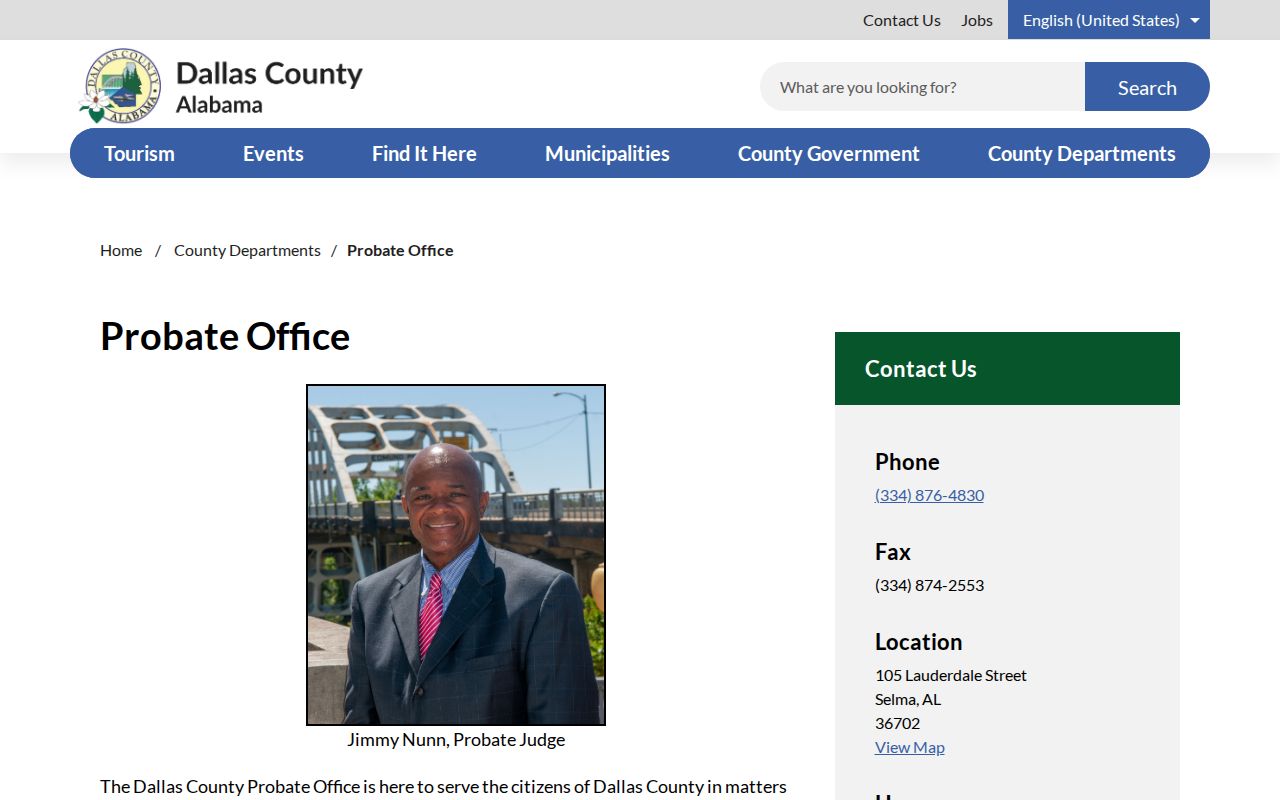
The Probate Office page is the starting point because it names the local office and lists the probate services that determine where a record request belongs.
Dallas County Probate Terms
Probate records use terms that are easy to confuse with general court language. These definitions help separate estate records from protective proceedings and recorded documents.
- Testator
- A person who made a will before death.
- Executor
- The person named to carry out a will and handle estate duties after appointment.
- Intestate
- Dying without a valid will, which changes how an estate is handled.
- Guardianship
- A court-supervised role tied to care or decision-making for another person.
- Conservatorship
- A court-supervised role tied to property, money, or financial interests.
- Involuntary commitment
- A probate matter involving mental-health treatment authority and sensitive record limits.
Search Dallas County Probate Records
Dallas County probate records and land records can be accessed through the county's Ingenuity portal. The public landing page provides separate paths for land records and probate case records, plus account login, sign-up instructions, search instructions, and terms. Portal controls may lead to more detailed search fields after the user selects a path or signs in.
| Field Label | Type | Required | Options or Format Notes |
|---|---|---|---|
| Look up Land Records | Button or link | Optional path | Opens the land record search path. |
| Look up Probate Case Records | Button or link | Optional path | Opens the probate case record search path. |
| Record Account Login | Login link | Required for account features | Account access is available. |
| View Account Sign Up Instructions | Modal or link | Optional | Instructions are available from the portal. |
| View Search Instructions | Modal or link | Optional | Search instructions are available from the portal. |
| View Terms and Conditions | Modal or link | Yes before or for use | Terms and disclaimer language are shown. |
The Dallas County Ingenuity probate and land records portal is the online lookup channel identified in the research.
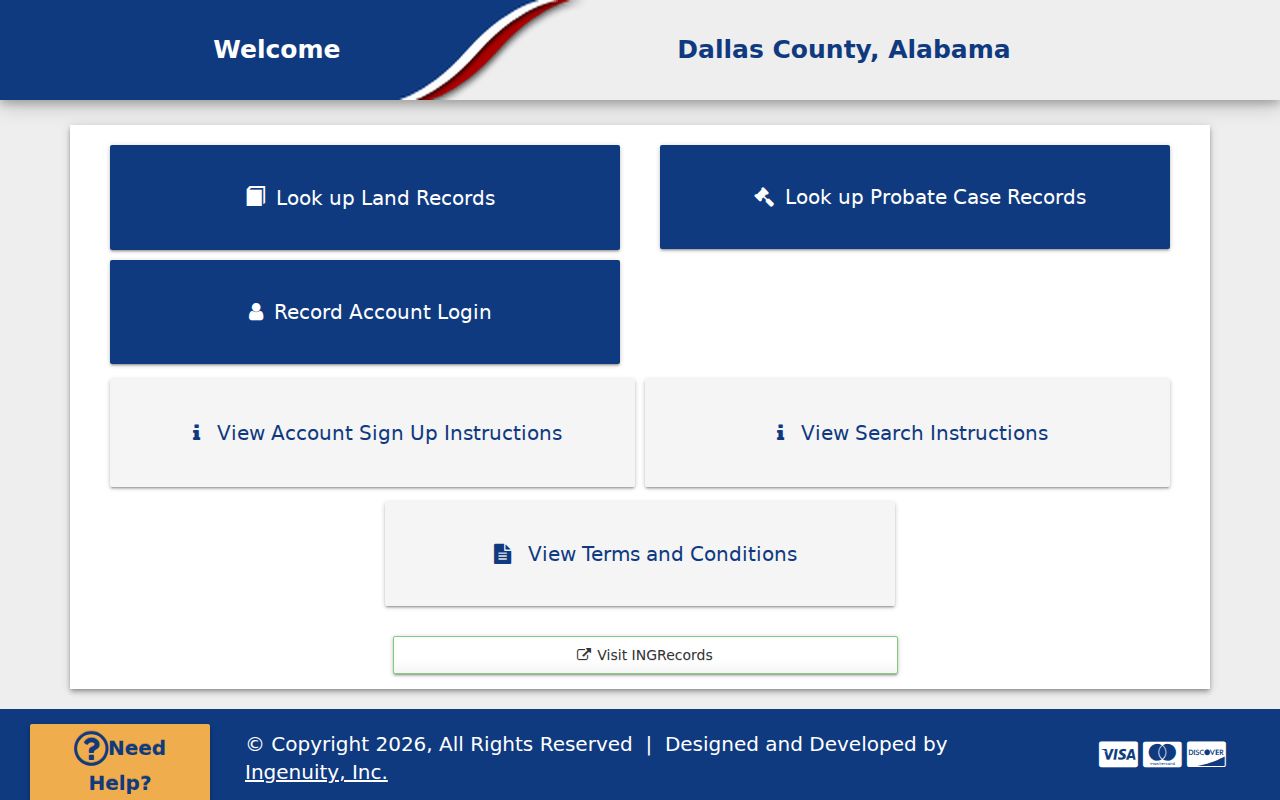
The portal matters because Dallas County does not have a separate statewide probate case search system in the research file.
Dallas County Probate Office
When a Dallas County probate record is not found online, the Probate Office is the fallback. Requests may need to go in person, by mail, by phone, by fax, or by email depending on the record type. The Recording Office has a distinct contact path for recorded documents and some copy requests.
Dallas County Probate Office
Probate Judge: Jimmy Nunn
105 Lauderdale Street
Selma, AL 36702
(334) 876-4830
Fax: (334) 874-2553
Hours: Monday-Friday, 8:30 a.m.-4:30 p.m.
Recording Office
105 Lauderdale Street
Selma, AL 36701
(334) 877-0625
recording@dallascounty-al.org
Mail: P.O. Box 987, Selma, AL 36702-0987
Note: The research flags a likely typo on one recording-hours page, so use the general Probate Office hours or call before visiting.
Dallas County Recording Records
The Dallas County Recording Office records, indexes, and maintains permanent records accessible to the public. The county names deeds, mortgages, liens, judgments, plats, powers of attorney, incorporation filings, and UCCs as examples. It also states that computer stations are available for public viewing of all records except military discharges and marriage licenses.
All property searches must be done by the individual. Staff will verify some information by telephone if book and page information is provided. Some copies may be processed by email. The county also warns filers not to include Social Security numbers in recorded documents and says a filer will be asked to redact an SSN before recording.
The Dallas County Recording and Records page explains those public-station, copy, and redaction rules.
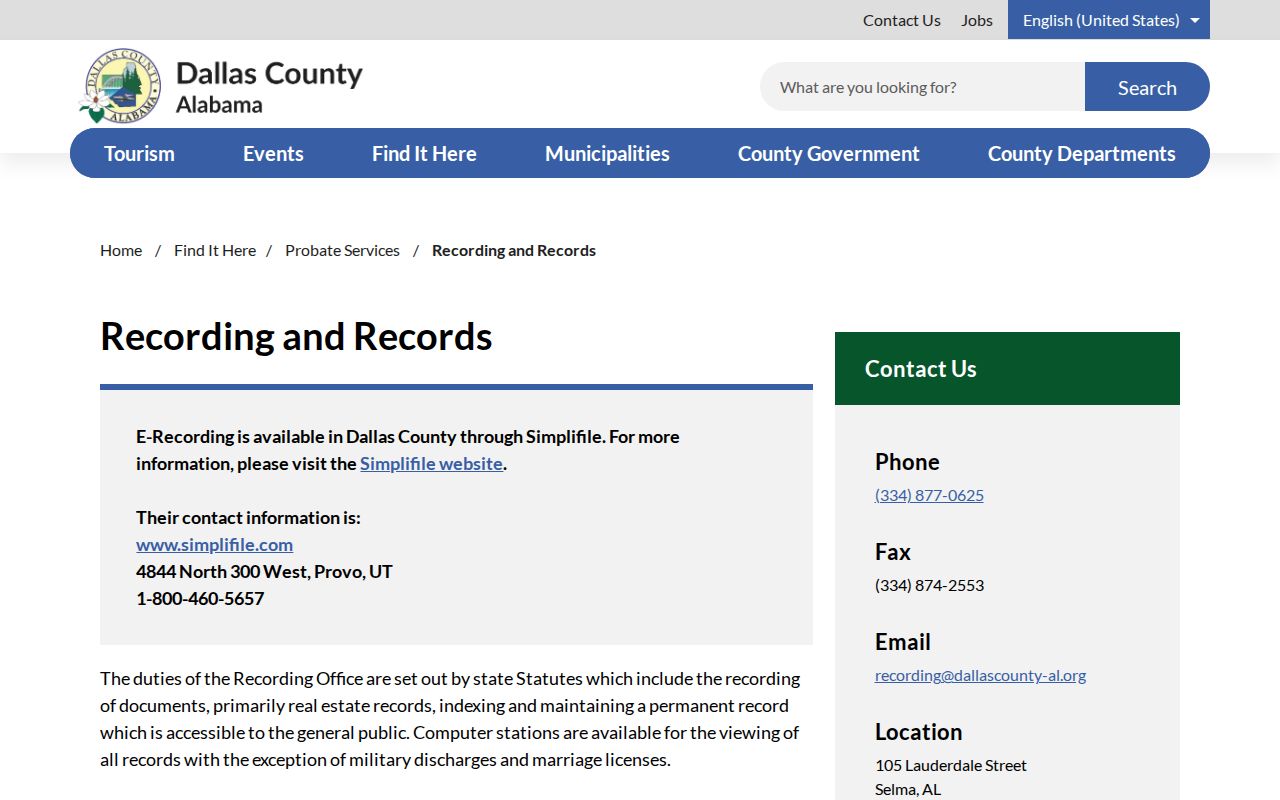
The recording page is important because many Dallas County probate users are actually looking for land or permanent recorded documents rather than an estate case.
Dallas County Probate Fees
The research captured several probate-related fees but did not capture a full estate filing fee schedule. The page should therefore list only the amounts supported by official local source notes and direct users to confirm estate filing costs with the Probate Office.
| Item | Amount | Notes |
|---|---|---|
| Adult name change | $33.50 | Forms are provided in the Probate Court Office. |
| Minor name change | $83.50 | Hearing is held; a minor age 14 or older must sign consent. |
| Marriage certificate recording | $80.00 | Handled through Probate Court / Recording Office. |
| Probate Judge marriage ceremony | $15.00 | Must be scheduled ahead. |
| Wills and estates filing fees | Confirm with office | Specific estate fee amounts were not captured in the research. |
The Dallas County recording fees page is the local source for recording-fee context.
Recording fees are separate from some Probate Court filing fees, so the office should confirm the exact amount before a filing is mailed.
Dallas County Probate Case Types
Wills and estates are the most common reason people search probate records, but Dallas County Probate Court also handles guardianships, conservatorships, name changes, declaration of legitimation, involuntary commitments, adoptions, notary matters, and elections. Each category has a different access profile. Some are public in part, while others may be restricted because they involve minors, adoptions, mental-health matters, or personal details.
The Dallas County wills and estates page is the local starting point for estate-related probate questions.
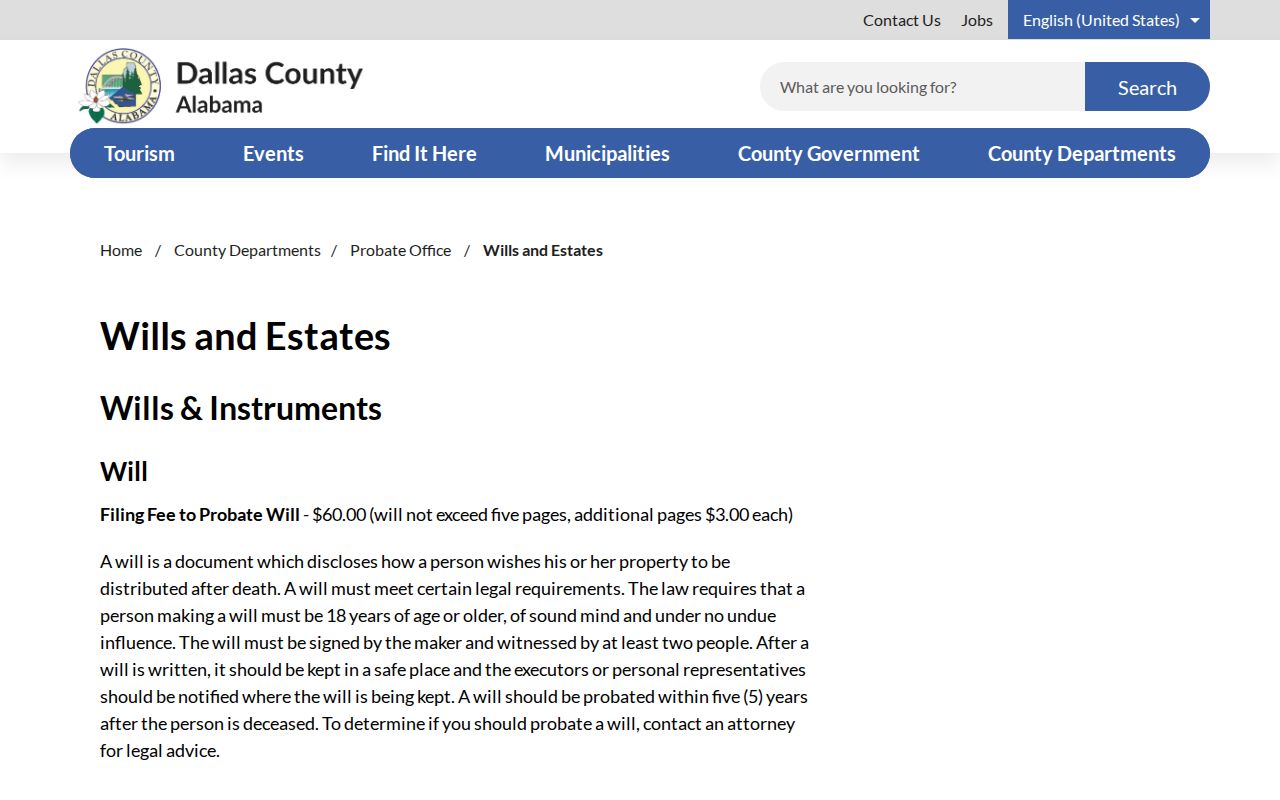
Estate records can include wills, appointment papers, orders, inventories, and related filings, but sensitive attachments may not be publicly available.
The Dallas County name changes page documents a separate Probate Court filing path for adults and minors.
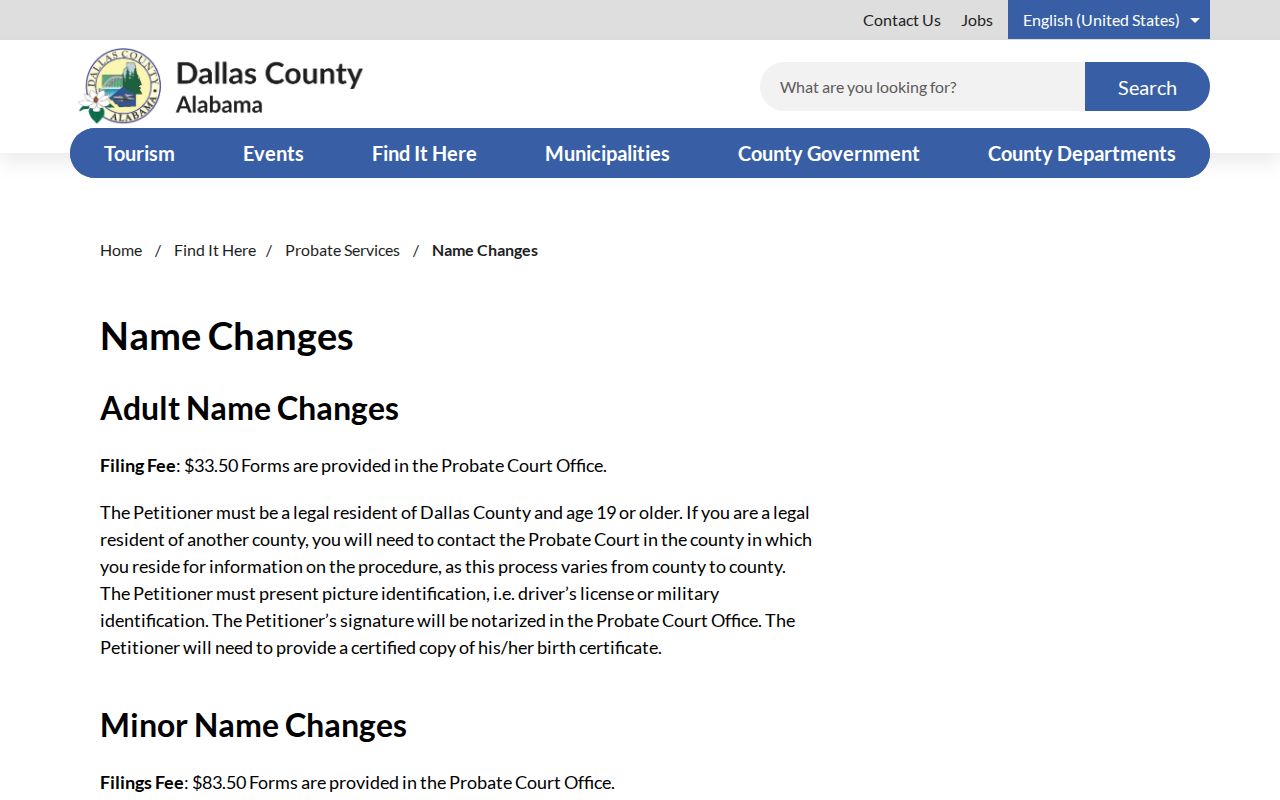
Name-change filings are probate records, but minor name changes have more safeguards than adult name changes.
Request Dallas County Probate Copies
For probate copies, use the channel that matches the record. Probate case lookup starts with the Ingenuity probate case option. Recorded documents route through the Recording Office. Copies by email or regular mail may be possible for some records, especially when the requester can provide book and page information.
- Identify whether the record is a probate case, estate, name change, guardianship, conservatorship, recorded document, or marriage certificate.
- Search the Ingenuity portal if the record is a probate case or land record suited to online lookup.
- For recorded documents, gather book and page information if available before calling or emailing the Recording Office.
- Use mail for copy requests that need paper handling: Dallas County Judge of Probate, ATTN: Recording Office, P.O. Box 987, Selma, AL 36702-0987.
- Ask the office whether the record is public, redacted, restricted, or available only by court order.
Restricted Dallas County Probate Records
Alabama public access rules do not make every probate file open. Adoption records, involuntary commitment files, records involving minors, and files sealed by court order may be restricted. Dallas County's own Recording Office gives a practical example of restricted access by excluding military discharges and marriage licenses from public computer station viewing.
Public permanent records such as deeds, liens, judgments, plats, powers of attorney, incorporations, and UCCs are more likely to be searched through the Recording Office. Even then, personal identifiers should be redacted before recording, and public copies may omit protected details. For ordinary public inspection and copying, Alabama's public-records statutes still operate subject to these exceptions.