
Dallas County Arrest Records and Charges
Dallas County arrest records are created on the law-enforcement side when a person is arrested, booked, held, cited, or processed through a warrant. The Sheriff's Department serves arrest warrants, handles investigations, maintains courthouse security, transports inmates and fugitives, and operates the county jail. The jail page gives a temporary facility address and contact information, but the research did not locate an official online Dallas County jail roster or mugshot database.
Court charges after arrest are different. They are the formal allegations that move into the court case through a complaint, warrant process, information, indictment, or prosecutor action. The District Attorney prosecutes criminal charges in the Fourth Judicial Circuit, and the Dallas County directory lists a District Attorney phone line. Once charges are filed, the Circuit Clerk's court record can show the charge, status, setting dates, disposition, sentence, fines, and costs. The full outcome belongs in the Dallas County criminal court records file.
Find Dallas County Arrest Records
Start by deciding whether the record needed is custody, warrant, charge, or final criminal-case information. Current county-jail custody questions should go to the Dallas County Jail or Sheriff's Department because no official county online jail roster was found. Charge and case-status questions start with Alacourt ACCESS or the Dallas County Circuit Clerk. Felony or misdemeanor warrant questions may start with the Sheriff, municipal police, magistrate, or Circuit Clerk depending on where the offense occurred.
- For current jail custody, call the Dallas County Jail at (334) 690-1200 or the Sheriff's Department at (334) 874-2530.
- For court charges after arrest, search Alacourt ACCESS by defendant name or case number.
- Open the criminal case record and review the charge list, case status, court settings, action summary, and costs.
- For active warrant or report-intake questions, use the Dallas County Magistrates & Warrants procedure or contact the proper law-enforcement agency.
- For statewide criminal-history review, use ALEA's official CHRI process rather than a private background site.
The ALEA Alabama Background Check page is the source for official CHRI review procedures tied to Dallas County arrest records and charges.
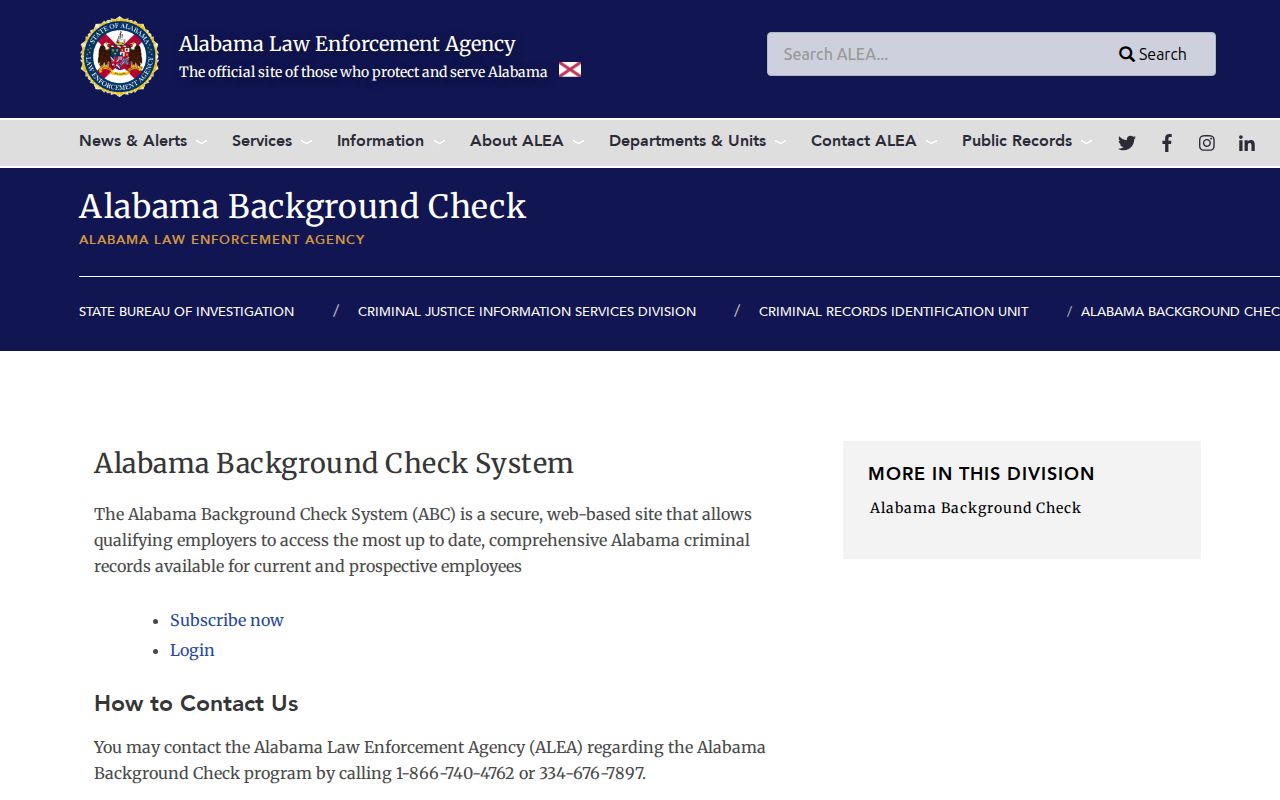
ALEA background checks are separate from a Dallas County court search because CHRI review follows fingerprint, ID, application, and fee requirements.
Dallas County Arrest and Warrant Path
The Dallas County Magistrates & Warrants page explains that magistrates are part of the judicial branch and must use independent judgment when issuing arrest warrants. It separates jurisdiction by offense type. Misdemeanors are handled by the Dallas County Warrant Magistrate's Office when the offense occurs outside Selma city limits. Felonies are covered when they occur in Dallas County. Traffic warrants connect to traffic offenses in Dallas County, often from a State Trooper or County Deputy citation. Worthless-check matters cover checks received in Dallas County.
The path starts with an incident or offense report. If the offense occurred under Sheriff's jurisdiction, the report is filed with the Dallas County Sheriff's Department. If it occurred in a municipality, the report goes to that police department. For misdemeanor charges outside city limits, the complainant goes to the Sheriff's Department and the investigator comes with the complainant to get a warrant. For felony allegations, an officer or investigator from the municipality or Sheriff's Department comes with the complainant to the Circuit Clerk's Office to obtain the warrant.
Process flow: Incident Report › Sheriff or Municipal Police › Investigator / Officer › Magistrate Review › Warrant or Charge › Court Case
Dallas County Charges After Arrest Documents
Formal court charges can enter the record through several document types. The exact path depends on the offense, prosecutor action, grand-jury action, warrant process, and court level. Dallas County research confirms complaint and warrant paths through the magistrate process and felony prosecution through the Fourth Judicial Circuit. It also identifies indictment as a common criminal record term and grand-jury charging document.
| Document | Who Starts It | Common Use | Where It Appears |
|---|---|---|---|
| Complaint | Complainant, officer, or prosecutor process | Starts or supports many misdemeanor and warrant matters | Magistrate or District Court record, then criminal case file |
| Information | Prosecutor | Formal prosecutor-filed charge when allowed by procedure | Circuit or District criminal court record |
| Indictment | Grand jury | Felony charging document after grand-jury action | Circuit Court criminal case file |
The U.S. Attorney's Office for the Southern District of Alabama is a federal prosecution source, not the Dallas County District Attorney, but it helps distinguish state charges from federal charges.
Federal charges are searched through federal systems, while Dallas County state charges are tracked through Alabama trial-court records and local court offices.
Dallas County Charge Status
Charge status shows what happened to a charge as the case moved through court. A charge can be pending at first, then amended, reduced, dismissed, placed on a docket for hearing, resolved by plea, tried, or otherwise disposed. One arrest can create more than one charge, and those charges can end in different ways. Read the status and disposition for each charge instead of assuming all charges ended the same way.
| Status | What It Means |
|---|---|
| Pending | The charge remains open or awaiting further court action. |
| Amended | The charge language, count, code, or legal theory changed in the case record. |
| Reduced | The prosecution or court action changed the charge to a lesser offense or lower severity. |
| Dismissed | The charge ended without conviction, though the record may still show the filing unless restricted or expunged. |
| Nolle Prosequi | The prosecutor elected not to proceed on the charge, subject to the court record and applicable law. |
| Convicted | The record shows guilt by plea, verdict, or other qualifying court outcome. |
Dallas County Charges vs Convictions
A charge is not a conviction. Dallas County arrest records and charge records can show allegations that were never proven. A conviction requires a guilty plea, verdict, or final court outcome establishing guilt. This distinction matters for employment, licensing, housing, immigration, sentencing, and expungement questions, but official background-check use has legal limits that private casual searches do not solve.
| Point | Charge | Conviction |
|---|---|---|
| Role | Accusation filed after arrest, complaint, warrant, information, or indictment | Final result establishing guilt through plea or verdict |
| Record Field | Charge list, code, count, severity, status | Disposition, sentence, fines, costs, probation, appeal entries |
| Can Change | Can be amended, reduced, dropped, or dismissed | Can be appealed, modified, or affected by later court orders |
| What to Verify | Each count and current status | Final disposition and sentence terms |
Dallas County Charge Codes and Severity
Dallas County charge records may classify offenses as felony, misdemeanor, traffic, or worthless-check matters depending on the source and court path. The magistrate page specifically identifies misdemeanor, felony, traffic, and worthless-check warrant jurisdiction. Traffic citations can also become court-charge records when an appearance is required or when failure to appear creates an alias warrant. DUI, driving with suspended license, and reckless driving require court appearance under the Dallas County Traffic Court page.
Charge codes usually connect the charge to a statute or offense category. The public research does not provide a Dallas County charge-code chart, so a reader should not infer the severity from the short label alone. The court record, charging document, and final disposition are the controlling sources for how the case was filed and resolved.
Note: One arrest can produce several charges, and each charge may have a separate status, disposition, or sentence.
Dallas County Statewide Arrest Checks
A Dallas County case search is not the same as a statewide criminal-history check. ALEA's Alabama Background Check / CHRI process requires fingerprints, photo identification, an application, and a fee. It is the official route for reviewing criminal-history information. Dallas County court records, by contrast, show the case filed in court and the court's actions on that case.
Active-fugitive and warrant-style information can also appear in state systems. The research identified an ALEA official search-fugitives page with last-name search and a public warning contact. Dallas County itself did not have an official online active warrant search located in the research. For local warrant questions, use the Sheriff's Department, Magistrates & Warrants page, Circuit Clerk, or municipal police agency depending on where the case began.
Dallas County Sealed Charge Records
Dallas County charge records can become restricted through sealing, juvenile confidentiality, or expungement. Juvenile law-enforcement records receive special protection under Alabama law, and juvenile court records are not public in the same way as adult criminal records. Expungement is granted by the court, not ALEA. Dallas County links a local expungement petition, and the court-fee table lists an expungement filing fee.
| Point | Sealed | Expunged |
|---|---|---|
| Public Access | Restricted from ordinary public viewing | Removed from ordinary public dissemination after court approval |
| Common Reason | Juvenile, protected, sensitive, or court-restricted matter | Qualifying criminal charge under Alabama Code Section 15-27 |
| Who Acts | Court, statute, or authorized record custodian | Criminal division of the circuit court where charges were filed |
| What Remains | Some authorized parties may still have limited access | Some law-enforcement, licensing, court, or statutory uses may remain |
The Alabama juvenile law-enforcement record confidentiality statute is the assigned source for Dallas County arrest records limits involving children.
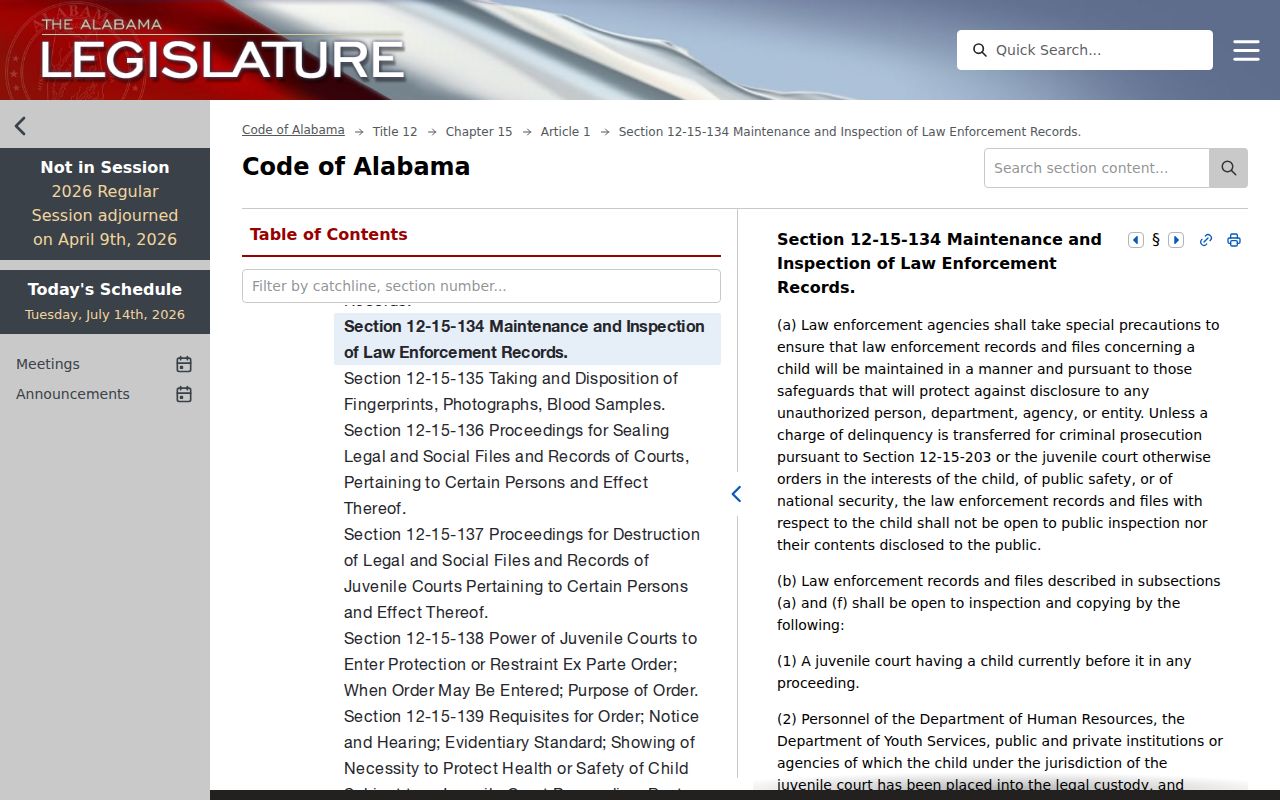
Juvenile arrest and charge information cannot be treated like adult arrest records because Alabama law gives youth-related law-enforcement records added protection.
Dallas County Prosecutor and Court Contacts
The District Attorney prosecutes criminal charges in the Fourth Judicial Circuit. The Dallas County office directory lists the District Attorney phone as 874-2540, and official election material identified Robert H. Turner, Jr. as the District Attorney candidate for the Fourth Judicial Circuit. A dedicated official biography page was not located in the research, so the safest path for current prosecution questions is the county directory phone and the court clerk's procedure guidance.
For court procedure, contact the Dallas County Circuit Clerk at 105 Lauderdale Street, Selma, phone (334) 874-2523. For Sheriff or jail matters, contact the Sheriff's Department at 102 Church Street, Selma, phone (334) 874-2530, or the Dallas County Jail temporary facility at 4805 US-80, phone (334) 690-1200. For warrant procedure, use the Dallas County Magistrates & Warrants route and the proper law-enforcement agency.
The Governor's February 2026 appointment release is assigned as a Fourth Judicial Circuit source for Dallas County arrest records and court charges.
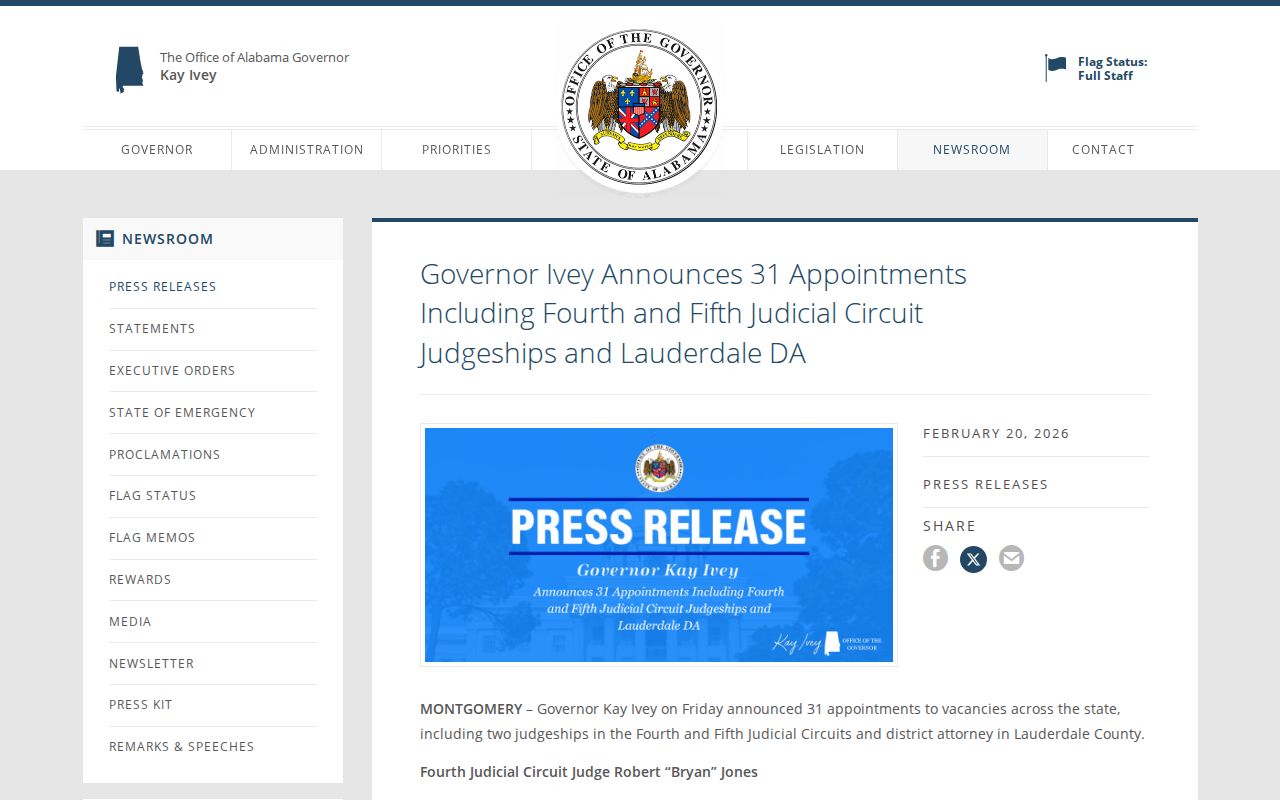
The release confirms current Fourth Judicial Circuit context, which matters because Dallas County criminal charges are handled inside that circuit structure.
Restricted Dallas County Charge Records
Not every arrest or charge detail is public. Active investigative material, sealed warrants, juvenile records, expunged charges, and sensitive court records may be unavailable or redacted. Arrest records may also sit with the Sheriff's Department or a municipal police department, while formal court charges are maintained through the court file. If the charge was never filed in court, it may not appear in a court charge search.
Use official channels for sensitive questions. Contact the Sheriff's Department or municipal police for report and arrest questions, the Circuit Clerk for court-charge and case-record questions, ALEA for CHRI review, and counsel or the court for expungement eligibility. Clerk staff can provide office procedure, but they cannot give legal advice.
Important: Arrest records and charge records are not consumer reports and should not be used for FCRA-regulated screening.